

From Oyster to Icon: The Rolex Story
 Rolex began in 1905 in London, when Hans Wilsdorf and Alfred Davis founded a company to assemble precise wristwatches—rare in an era dominated by pocket watches. In 1908, Wilsdorf registered the name Rolex, choosing a short, memorable word that looked elegant on a dial and sounded the same in many languages.
Accuracy soon became the brand’s calling card: in 1910 a Rolex wristwatch earned a Swiss Certificate of Chronometric Precision, and by 1914 the Kew Observatory in England awarded a Rolex wristwatch a prestigious Class A certificate—accolades once reserved for marine chronometers.
In 1919, Rolex moved headquarters to Geneva, positioning the brand at the heart of Swiss watchmaking.
Breakthroughs: Oyster & Perpetual
Rolex pioneered two of the most important watchmaking innovations of the 20th century:
- 1926 – Oyster: The first commercially successful waterproof and dustproof case, engineered with a hermetic crown and bezel.
- 1931 – Perpetual rotor: A self‑winding movement with a free‑spinning rotor that became the template for modern automatic watches.
The Tool‑Watch Era
From the 1950s, Rolex designed watches around real‑world professions and pursuits—pieces built as instruments first, icons second:
- Explorer (1953): Inspired by mountaineering feats; high legibility and robustness.
- Submariner (1953): A benchmark dive watch with rotating bezel and strong water‑resistance.
- GMT‑Master (1955): Dual‑time bezel for the jet age.
- Day‑Date (1956): The first wristwatch to display both date and day spelled out.
- Cosmograph Daytona (1963): Racing chronograph that became a cultural phenomenon.
Timeline: Key Milestones
- 1905: Wilsdorf & Davis founded in London.
- 1908: Rolex name registered.
- 1910: First Swiss chronometric certificate for a wristwatch.
- 1914: Kew Observatory Class A certificate awarded to a Rolex wristwatch.
- 1919: Headquarters moved to Geneva, Switzerland.
- 1926: Oyster waterproof case unveiled.
- 1931: Perpetual self‑winding rotor patented.
- 1945: Datejust introduced with date window.
- 1953: Explorer and Submariner debut.
- 1955: GMT‑Master launched for intercontinental pilots.
- 1956: Day‑Date released, day spelled in full.
- 1963: Cosmograph Daytona introduced.
- 1960: Experimental Deep Sea Special accompanies the Trieste to the ocean’s deepest point.
Why Rolex Endures
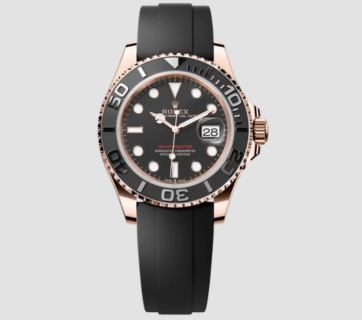
Rolex sits at a rare intersection of engineering and symbolism. Its designs evolve slowly, its manufacturing is vertically integrated, and its quality standard—“Superlative Chronometer”—keeps accuracy at the center. Owned by the Hans Wilsdorf Foundation, Rolex also has a unique structure: prestige meets purpose.
Quick Facts
- Founded: 1905 (London)
- Founder: Hans Wilsdorf (with Alfred Davis)
- HQ: Geneva, Switzerland (since 1919)
- Key innovations: Oyster case (1926), Perpetual rotor (1931)
- Icons: Submariner, Explorer, GMT‑Master, Day‑Date, Daytona