

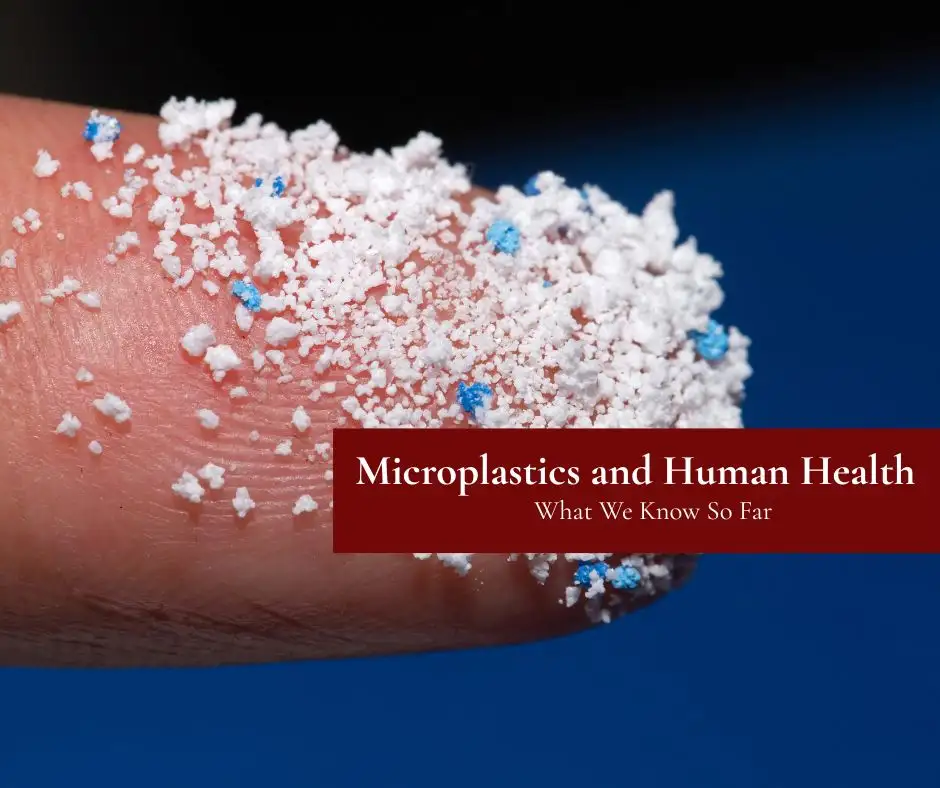
Microplastics are no longer an environmental hypothesis. They are measured, quantified, and documented inside the human body. Over the past five years, peer-reviewed research has confirmed their presence in human blood, lungs, placenta, breast milk, and digestive waste. This evidence marks a critical shift: microplastics are not only around us — they are biologically relevant.
Documented human exposure (not estimates)
In 2022, researchers detected microplastics in human blood samples for the first time, confirming systemic exposure rather than simple ingestion and excretion. Separate studies have identified plastic particles in:
lung tissue
placental tissue (both maternal and fetal sides)
breast milk
stool samples
These findings demonstrate that microplastics can cross biological barriers and persist inside the body.
Independent studies also show that bottled water may contain thousands to tens of thousands of plastic particles per liter, depending on packaging, filtration, and bottling processes. Airborne microplastics, especially from synthetic textiles, are now recognized as a major inhalation route, particularly indoors.
Why microplastics raise serious health concerns
Microplastics are not chemically neutral. Their risk profile comes from three evidence-based mechanisms:
1. Particle interaction with cells
Laboratory studies show that micro- and nanoplastics can induce:
inflammatory responses
oxidative stress
cellular damage
Smaller particles are of particular concern due to their ability to interact directly with cell membranes.
2. Chemical exposure
Plastics contain additives such as:
plasticizers (e.g. phthalates)
stabilizers
flame retardants
Many of these substances are already associated with endocrine disruption, metabolic interference, and reproductive toxicity. Microplastics act as carriers of these chemicals into biological systems.
3. Vector effect for other pollutants
Microplastics bind heavy metals, persistent organic pollutants, and microorganisms. This means exposure is not limited to plastic alone, but potentially amplifies overall toxic load.
Microplastics and Human Health.
What current science agrees on and what it doesn’t
There is scientific consensus on exposure. There is growing evidence of biological interaction.
What remains under investigation is long-term clinical impact in humans.
This gap does not imply safety. It reflects:
the novelty of widespread exposure
the difficulty of long-term epidemiological tracking
ethical limits on human testing
Historically, similar uncertainty surrounded substances like lead, asbestos, and fine particulate air pollution — until long-term effects became undeniable.
Chronic exposure is the real risk
Microplastic exposure is:
continuous
cumulative
unavoidable in modern environments
Low-dose exposure over decades is precisely the pattern associated with chronic inflammatory and metabolic diseases. Children, pregnant individuals, and people with compromised immune systems are considered higher-risk groups due to developmental and physiological sensitivity.
Risk reduction is possible, elimination is not
No individual can fully avoid microplastics. However, evidence-based reduction strategies exist:
avoid heating food in plastic containers
reduce reliance on bottled water
prefer glass or stainless steel food storage
ventilate indoor environments daily
limit synthetic textiles where possible
These actions are not lifestyle trends — they are exposure-reduction measures.
Microplastics and Human Health.
Why this issue demands attention now
Microplastics represent a new category of environmental health exposure: invisible, persistent, and largely unregulated. Waiting for complete certainty before acting has repeatedly failed in public health history.
The data already shows enough to justify precaution.
Conclusion
Microplastics are already present in human biological systems. This is confirmed by laboratory analysis, not speculation. While research continues to define long-term health outcomes, exposure is ongoing and cumulative.
Reducing unnecessary plastic contact is no longer an environmental gesture.
It is a public health decision grounded in evidence.
Research & Data Sources (indicative, peer-reviewed)
Leslie et al., Environment International – Microplastics in human blood
Ragusa et al., Environment International – Microplastics in human placenta
Schwabl et al., Annals of Internal Medicine – Microplastics in stool samples
WHO reports on microplastics in drinking water
European Environment Agency (EEA) – Plastic exposure and health
Nature Reviews & Environmental Science journals (2020–2024)